





Introduction
Problem-solving is one of the most important skills children need in their daily lives. It helps them think clearly, make decisions, and handle challenges with confidence. Whether in school or at home, kids use problem-solving skills all the time.
Today, online learning platforms offer many ways to help children develop these skills in fun and interactive ways. Through games, puzzles, and challenges, kids can practice thinking and finding solutions without feeling stressed.
In this article, we will explore how kids can develop problem-solving skills online and why this is important for their future.
What Is Problem-Solving?
Problem-solving is the ability to find solutions to challenges or questions. It involves:
- Understanding the problem
- التفكير في الحلول (thinking about solutions)
- Choosing the best answer
- Trying different approaches
Children use these skills when they solve puzzles, answer questions, or face real-life situations.
Learning Through Games and Puzzles
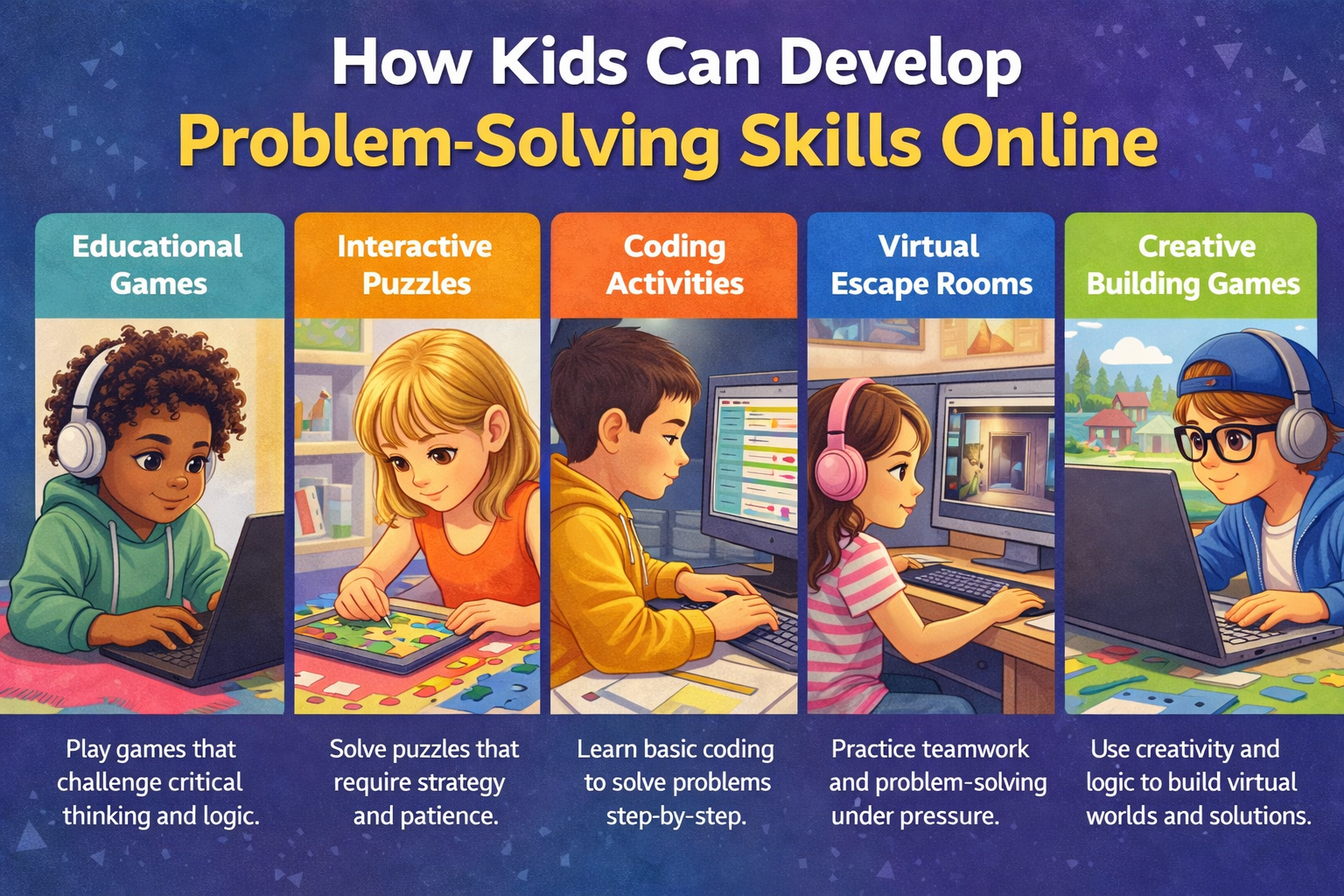
Online platforms offer many games and puzzles that require thinking and strategy.
These activities challenge kids to:
- Find patterns
- Solve mysteries
- Complete tasks step by step
This makes learning exciting and helps children practice problem-solving naturally.
Encouraging Logical Thinking
Problem-solving requires logical thinking. Kids need to understand how things connect and work together.
Online activities like matching, sorting, and sequencing help build this skill.
Logical thinking is important for subjects like math, science, and even everyday decisions.
Trying Different Solutions
Online learning encourages children to try more than one solution.
If one answer does not work, kids can try again in a different way. This teaches flexibility and creativity.
Children learn that there is often more than one way to solve a problem.
Learning from Mistakes
Mistakes are an important part of problem-solving. Online platforms allow kids to make mistakes without pressure.
They can try again and learn what works and what doesn’t.
This helps children become more patient and confident.
Building Confidence
When kids solve problems successfully, they feel proud of themselves.
Each success builds confidence and encourages them to take on new challenges.
Confidence is key to becoming a strong problem-solver.
Interactive Challenges
Interactive challenges keep children engaged and focused.
These may include:
- Quizzes
- Strategy games
- Brain teasers
Such activities require attention and thinking, which improves problem-solving skills over time.
Learning at Their Own Pace
Children need time to think and understand problems.
Online platforms allow kids to work at their own speed. They can take their time and think carefully.
This improves the quality of their thinking and solutions.
Role of Parents
Parents can support problem-solving skills by:
- Encouraging kids to think before answering
- Asking questions instead of giving answers
- Choosing educational games and platforms
- Praising effort, not just results
Guidance helps children become better thinkers.
Conclusion
Developing problem-solving skills is essential for children’s success in school and life. Online learning provides fun and effective ways to practice these skills.
Through games, puzzles, and interactive activities, kids can learn how to think, analyze, and find solutions.
With the right support, children can become confident problem-solvers ready to face any challenge.