


Introduction
Reading has always been an important part of children’s learning, but the way kids read is changing. With the growth of technology, digital reading is becoming more popular among children.
Digital reading includes e-books, interactive stories, and audiobooks. These tools are making reading more fun, flexible, and accessible.
In this article, we will explore the future of digital reading for kids and how it will shape learning.
Growth of Digital Books
Digital books are becoming more common.
Children can now access thousands of books on:
- Tablets
- Smartphones
- Computers
This makes reading easier and more convenient.
Interactive Reading Experiences
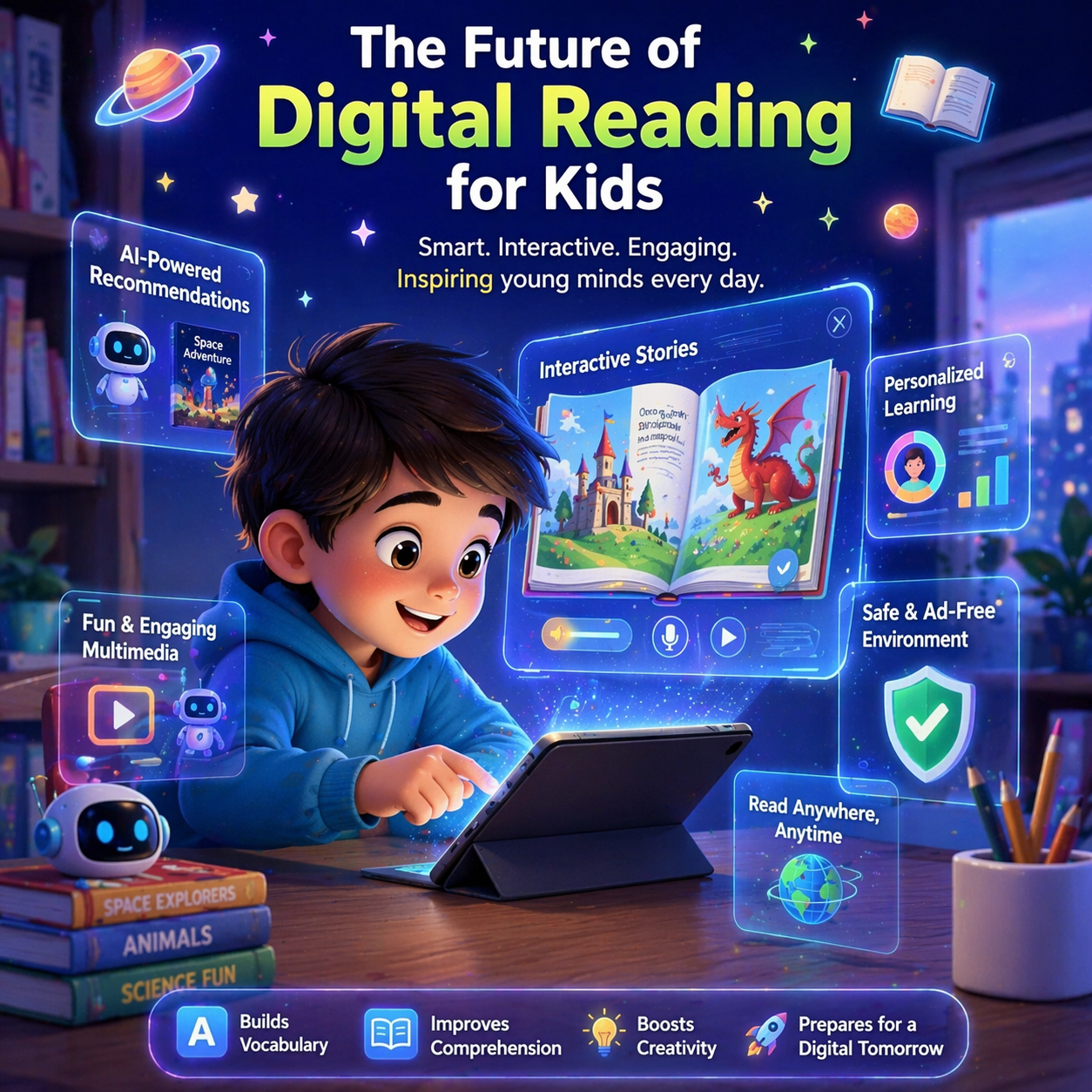
Future digital books will be more interactive.
Kids will be able to:
- Click on characters
- Watch animations
- Play mini-games داخل القصة
This will make reading more engaging.
Personalized Reading
Technology will allow reading to be personalized.
Books can adjust based on:
- Reading level
- Interests
- Learning speed
This helps children learn at their own pace.
Integration of Audio and Visuals
Digital reading will combine:
- Text
- Audio
- Visual effects
This supports different learning styles and makes reading easier.
Encouraging Reluctant Readers
Some children do not enjoy traditional reading.
Digital tools can attract them through:
- Games
- Animations
- Interactive features
This encourages more kids to read.
Learning Anytime and Anywhere
Digital reading allows children to read anywhere.
They can read:
- At home
- While traveling
- During free time
This increases reading opportunities.
Safer and Controlled Content
Future platforms will focus more on safety.
Parents will have better tools to:
- Control content
- Monitor usage
- Ensure safe reading
Safety is a top priority.
Balancing Digital and Traditional Reading
Even with digital growth, traditional books remain important.
The best approach is to combine both:
- Digital reading for interaction
- Printed books for focus
Balance gives the best results.
Role of Parents
Parents will continue to guide children by:
- Choosing suitable content
- Setting screen time limits
- Encouraging reading habits
- Supporting learning
Guidance ensures a healthy experience.
Conclusion
The future of digital reading for kids is full of exciting possibilities. With interactive features, personalized content, and easy access, reading will become more enjoyable and effective.
When used wisely, digital reading can support learning and help children develop a lifelong love for books.
Combining technology with traditional reading will create the best learning experience for children.