



Introduction
Understanding emotions is an important part of a child’s development. Children need to learn how to recognize their feelings and understand the feelings of others. One of the best ways to develop this skill is through reading stories.
Stories often include different characters and situations that show a wide range of emotions. When children read or listen to these stories, they begin to understand feelings in a simple and natural way.
In this article, we will explore how reading stories helps kids understand emotions and why this is important.
What Are Emotions?
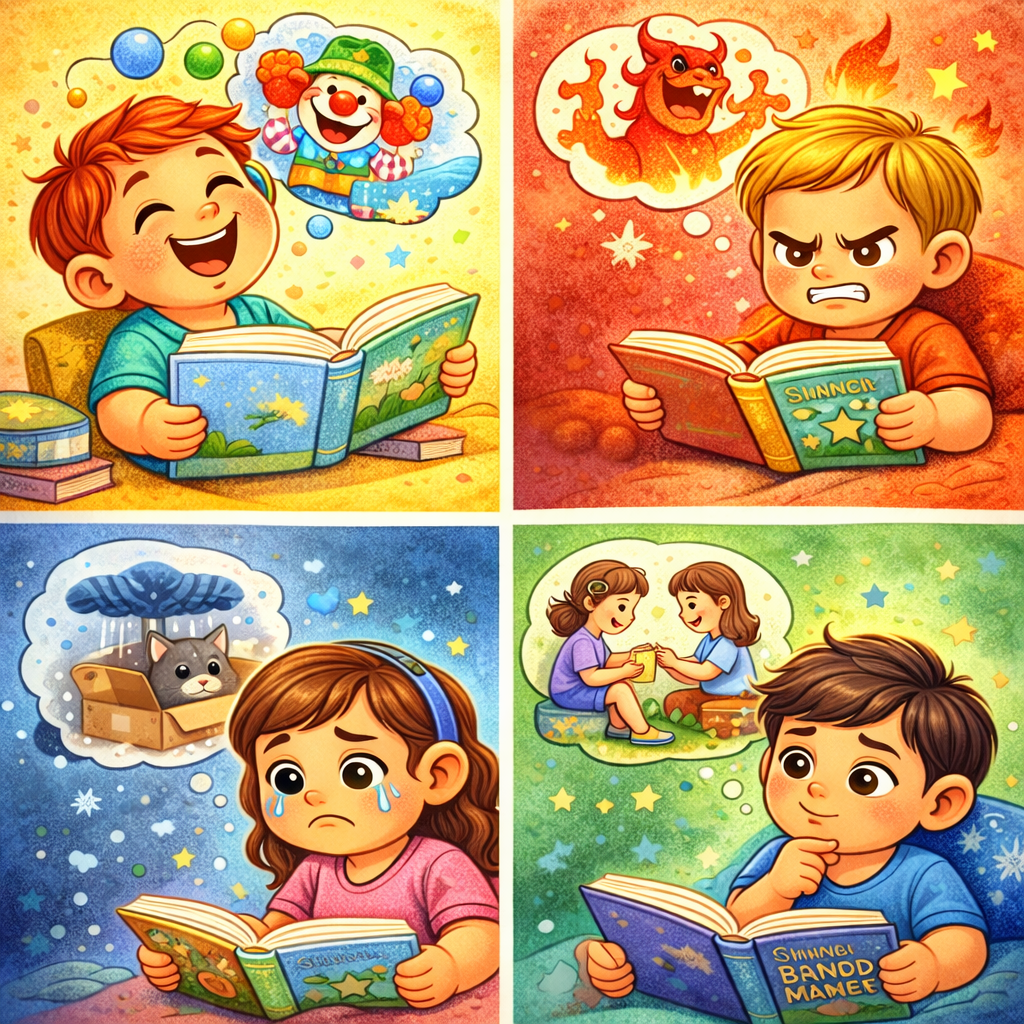
Emotions are feelings that people experience, such as:
- Happiness
- Sadness
- Anger
- Fear
- Excitement
Learning to understand emotions helps children manage their behavior and relationships.
Learning Through Characters
Stories introduce children to different characters.
Each character may feel something different depending on the situation.
Children learn to recognize emotions by observing how characters react.
Understanding Different Situations
Stories often include challenges and events.
For example:
- A character losing something
- A character achieving a goal
- A character helping a friend
These situations help children understand why people feel certain emotions.
Building Empathy
Empathy means understanding and caring about how others feel.
When children read stories, they imagine themselves in the character’s place.
This helps them develop empathy and kindness.
Learning to Express Feelings
Stories give children words to describe emotions.
They learn how to say:
- “I feel happy”
- “I feel sad”
- “I am excited”
This improves emotional communication.
Managing Emotions
By seeing how characters handle emotions, children learn how to manage their own feelings.
They see examples of:
- Staying calm
- Solving problems
- Asking for help
This helps them handle real-life situations better.
Encouraging Discussion
Reading stories creates opportunities for discussion.
Parents can ask questions like:
- How did the character feel?
- Why did they feel that way?
- What would you do?
These conversations deepen understanding.
Supporting Social Skills
Understanding emotions helps children interact better with others.
They become more:
- Kind
- Patient
- Understanding
This improves friendships and relationships.
Role of Parents
Parents can support emotional learning by:
- Choosing meaningful stories
- Talking about characters’ feelings
- Encouraging children to share their emotions
- Listening with care
Support makes learning more effective.
Conclusion
Reading stories is a powerful way to help children understand emotions. It teaches them how to recognize feelings, build empathy, and express themselves.
These skills are important for both personal growth and social relationships.
By encouraging children to read and discuss stories, parents can help them become emotionally aware and confident individuals.