




Introduction
Learning does not only happen at school. Home is also an important place where children can grow, explore, and develop new skills. With the help of educational websites, learning at home has become easier and more effective than ever before.
These websites provide children with fun, interactive, and structured content that supports what they learn in school. They also give parents helpful tools to guide their children’s education.
In this article, we will explore how educational websites support kids’ learning at home and why they are a valuable resource for families.
Creating a Learning Environment at Home
A good learning environment is important for children. Educational websites help create this environment by providing organized and easy-to-use content.
Instead of random videos or games, kids can access structured lessons that follow a clear path. This makes learning at home more focused and productive.
Children can sit comfortably and learn in a quiet, safe space.
Supporting School Education
Educational websites are a great way to support what children learn at school.
If a child does not understand a lesson, they can review it online. If they want to learn more, they can explore additional topics.
This extra support helps children stay on track and improve their understanding.
Flexible Learning Schedule
One of the biggest advantages of learning at home is flexibility. Children can choose the best time to study.
They can learn after school, during weekends, or whenever they feel ready.
This flexibility reduces stress and helps children learn in a relaxed way.
Making Learning Fun
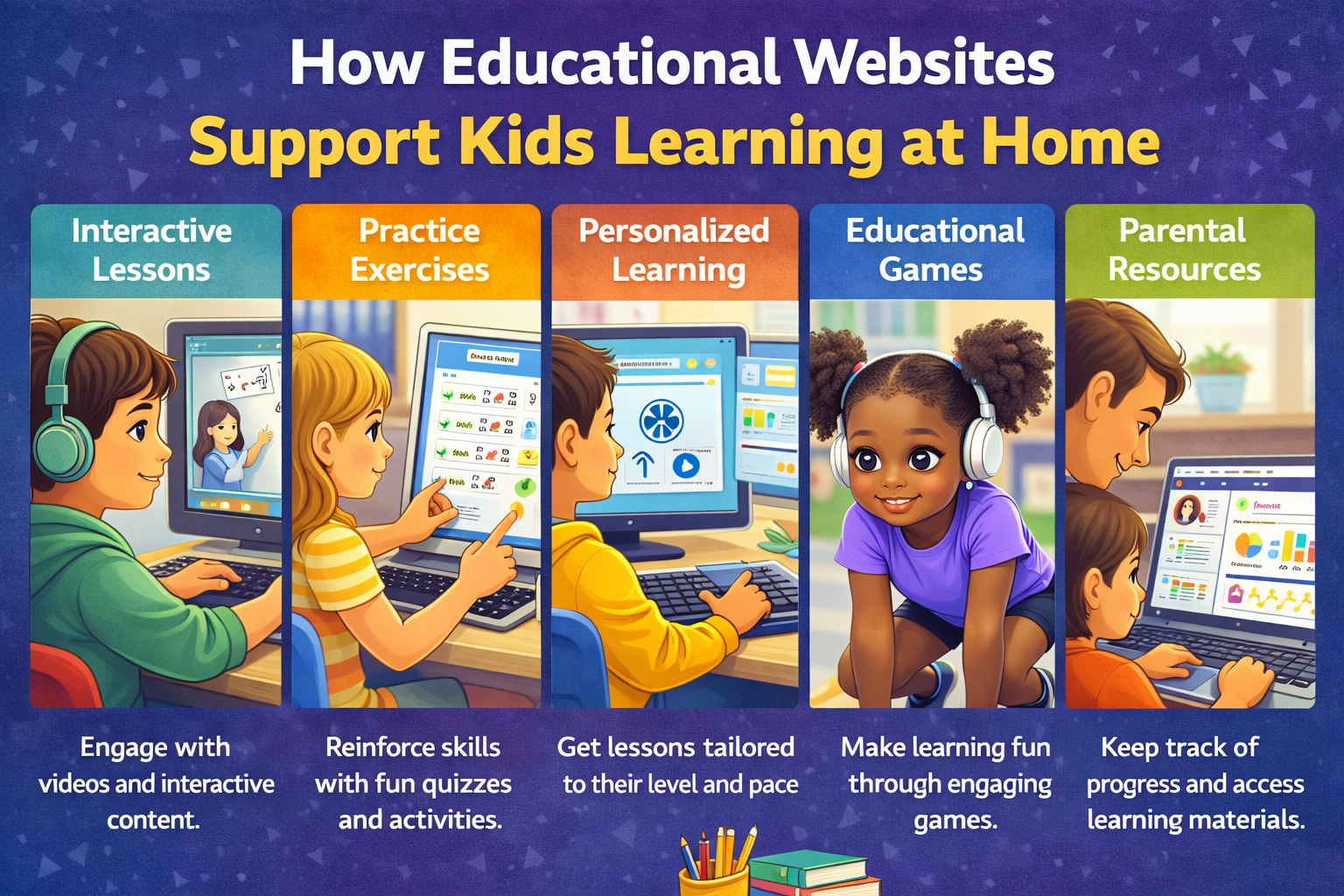
Educational websites use games, videos, and interactive activities to make learning enjoyable.
When learning is fun, children are more willing to spend time studying. They do not feel forced to learn.
This positive experience helps build a love for education.
Encouraging Self-Learning
Online platforms encourage children to take responsibility for their learning.
Kids can choose activities, repeat lessons, and explore topics on their own.
This builds independence and helps children become confident learners.
Tracking Progress
Many educational websites include tools that track a child’s progress.
Parents can see what their child has learned and where they need more practice.
This helps parents support their children in a more effective way.
Safe and Controlled Content
The internet can sometimes be unsafe for children, but educational websites are designed to be child-friendly.
They provide safe content without harmful material. This allows kids to learn freely without risks.
Parents can feel more comfortable knowing their children are using trusted platforms.
Strengthening Parent-Child Interaction
Learning at home can also be a shared experience. Parents can sit with their children, explore websites together, and discuss what they learn.
This strengthens the relationship between parents and children.
It also helps parents understand their child’s strengths and challenges.
Developing Daily Learning Habits
Educational websites make it easier to build daily learning habits.
Short lessons and fun activities encourage children to practice regularly.
Over time, this creates a routine that supports continuous learning.
Conclusion
Educational websites play an important role in supporting kids’ learning at home. They provide flexible, fun, and safe ways for children to learn and grow.
By combining school education with online learning, children can improve their skills and gain confidence.
With the right guidance from parents, educational websites can turn home into a powerful place for learning and development.