




Introduction
Confidence is one of the most important qualities a child can develop. It affects how kids learn, communicate, and face challenges in life. When children believe in themselves, they are more willing to try new things and overcome difficulties.
Online learning has become a powerful way to help children build confidence. Through interactive lessons, games, and personalized experiences, kids can learn in a comfortable and supportive environment.
In this article, we will explore how online learning helps build kids’ confidence and why it plays an important role in their development.
Learning Without Pressure
In traditional classrooms, some children may feel shy or afraid of making mistakes in front of others. This can lower their confidence.
Online learning removes this pressure. Kids can learn privately, at their own pace, without worrying about what others think.
This safe space allows children to try, fail, and try again without fear.
Progress at Their Own Pace
Every child learns differently. Some understand quickly, while others need more time.
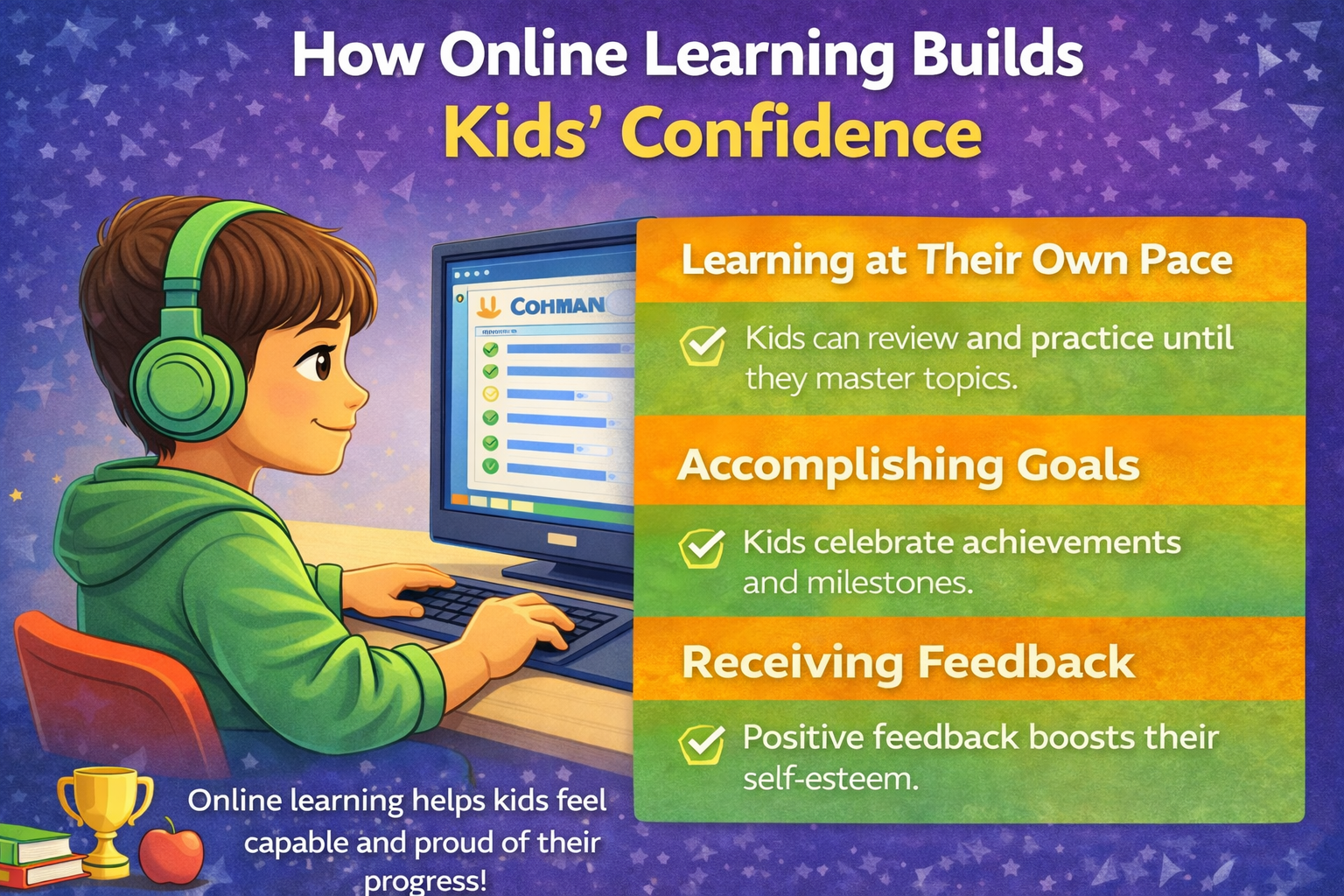
Online platforms allow kids to move at their own speed. They can repeat lessons, review mistakes, and take breaks when needed.
When children are not rushed, they feel more comfortable and confident in their learning journey.
Celebrating Small Achievements
Online learning platforms often include rewards like:
- Points
- Stars
- Badges
- Certificates
These rewards may seem small, but they have a big impact on children.
Each achievement shows progress, which helps kids feel proud of themselves. This builds confidence step by step.
Encouraging Independent Learning
Online learning gives children control over their education. They can choose activities, explore topics, and make decisions on their own.
This independence helps kids trust their abilities. They begin to feel responsible for their own learning.
Over time, this creates strong, confident learners.
Learning from Mistakes
Mistakes are a natural part of learning. However, in some situations, children may feel embarrassed when they make mistakes.
Online platforms handle mistakes differently. They provide gentle feedback and allow kids to try again.
This teaches children that mistakes are not failures, but opportunities to learn and improve.
Building Problem-Solving Skills
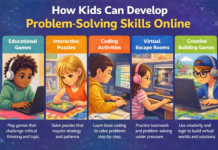
Many online learning activities include puzzles and challenges. These require kids to think and find solutions.
When children solve problems successfully, they feel more confident in their abilities.
Problem-solving also teaches persistence and patience.
Positive Learning Environment
Educational websites are designed to be supportive and encouraging. They use friendly messages, fun visuals, and positive feedback.
This creates an environment where children feel safe and motivated.
A positive experience helps build a strong connection between learning and confidence.
Improving Communication Skills
Some online platforms include reading, speaking, and listening activities.
These activities help children express themselves better and understand others.
As communication skills improve, children feel more confident in social situations as well.
Role of Parents
Parents play an important role in building their child’s confidence.
They can:
- Encourage effort, not just results
- Celebrate progress
- Provide support when needed
- Choose the right learning platforms
With the right guidance, online learning becomes even more effective.
Conclusion
Online learning is more than just education—it is a tool for building confidence. It gives children the freedom to learn at their own pace, make mistakes, and celebrate their achievements.
By creating a safe and engaging environment, online platforms help kids believe in themselves and their abilities.
With confidence, children are more likely to succeed, not only in school but in all areas of life.